
Tallahassee Public Adjuster
Licensed Florida public adjusters serving Leon County and the Big Bend region
✓ No Fee Unless We Recover
✓ Featured on Forbes, Realtor.com & Insurance.com
✓ 5 Stars on Google
Fill Out the Form Below to Get Started With your Free Claim Review:
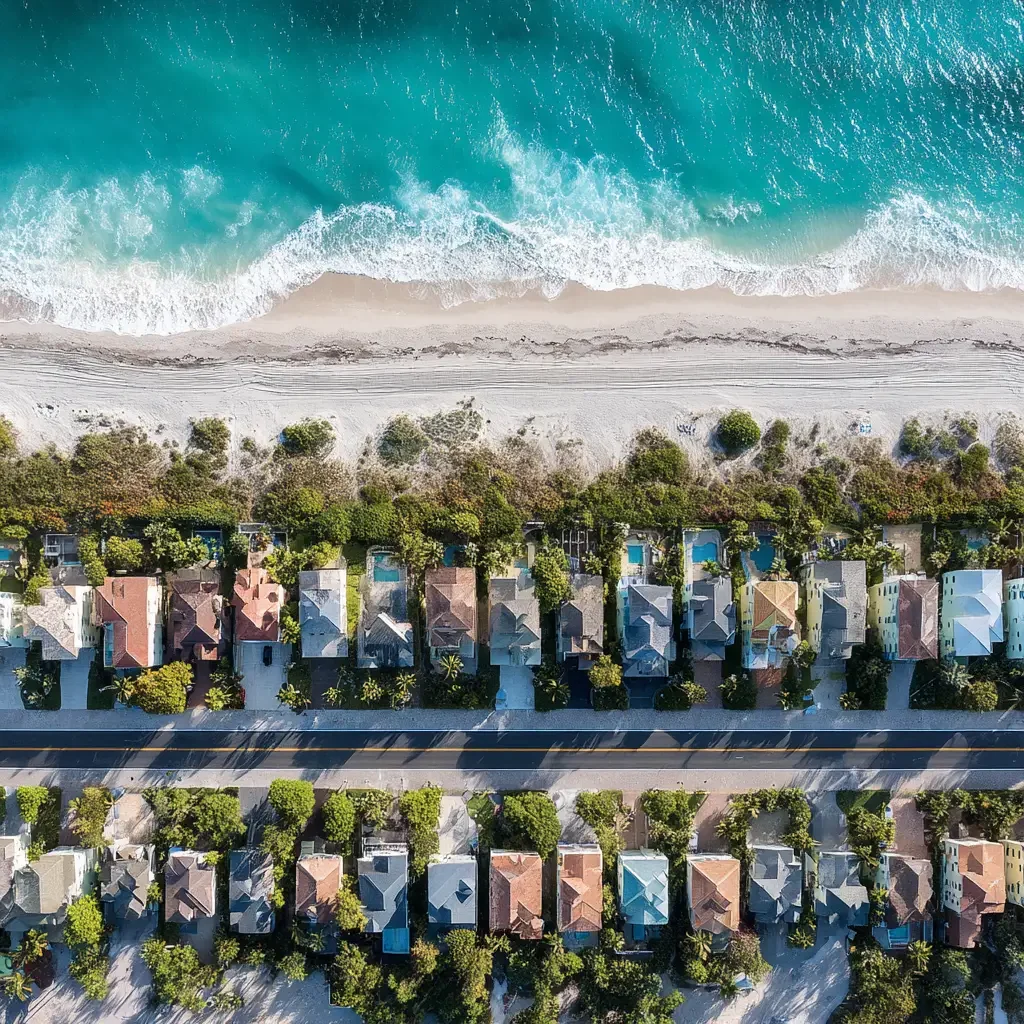
Tallahassee is Florida's capital city — home to two major universities, tens of thousands of state workers, and one of the densest urban tree canopies in the Southeast. That canopy defines the city and creates the single biggest source of property damage claims in Leon County. When hurricanes, tornadoes, or severe storms tear through the Big Bend, trees crash through roofs, flatten carports, and expose interiors to days of rain. Insurance carriers send their own adjusters to close files fast and hold payouts low. Shoreline Public Adjusters works exclusively for you — the policyholder — to make sure your claim captures the full cost of repairs, not the carrier's first lowball number.
As a licensed Florida public adjuster (License #G199012), we represent Tallahassee homeowners, business owners, and families across Leon County and the Big Bend region. From established neighborhoods in Killearn and Betton Hills to growing communities in SouthWood, Midtown, and the Capitol corridor, we understand the damage patterns, carrier tactics, and policy details that define insurance claims in this government-and-university-centered community.




As Seen On:








Get Your Free Tallahassee Claim Review

Areas We Serve in the Tallahassee Region
We represent property owners throughout Leon County, the Big Bend corridor, and the surrounding rural counties that share Tallahassee's storm exposure and tree-heavy landscapes. Whether your home is in a Killearn subdivision, a Southwood townhome community, a Midtown bungalow near FSU, or a commercial building on the Capitol corridor, we handle insurance claims across the region.
Leon County
Tallahassee, Killearn Estates, Killearn Acres, Killearn Lakes, Betton Hills, Midtown, SouthWood, Bradfordville, Waverly Hills, Los Robles, Indian Head Acres, and Woodville.
Big Bend Counties
Wakulla County (Crawfordville, St. Marks, Panacea), Gadsden County (Quincy, Havana, Chattahoochee), Jefferson County (Monticello), Madison County (Madison, Greenville), and Taylor County (Perry).
Gulf Coast & Panhandle
Franklin County (Apalachicola, Carrabelle, St. George Island), Liberty County (Bristol), Panama City, Bay County, and communities across the Florida Panhandle.
If you own property in the Tallahassee area and need help with an insurance claim, contact our public adjuster team for a free damage assessment. It costs nothing for us to review your policy and evaluate your loss.
Types of Property Damage We Handle in Tallahassee
The Big Bend region generates a wide range of damage types. Tallahassee's dense tree canopy, clay-heavy soils, and inland position create claim patterns that differ from coastal Florida. We tailor our documentation and negotiation strategy to each one.
Hurricane & Tropical Storm
Hurricane Michael drove 100 mph gusts through Leon County in 2018, toppling thousands of trees into homes and knocking out power to every customer in the county.
Hermine struck in 2016 as the first direct hurricane hit since 1985, destroying 45 structures and badly damaging 187 more. Kate hammered the Panhandle in November 1985 with 100 mph downbursts. After each storm, carriers claimed tree-fall damage was a care issue rather than a covered peril. We counter with engineering reports linking root failure to the storm's wind force and soaked soil, forcing the carrier to pay for the full damage chain.
Wind & Tornado
Three tornadoes converged on Tallahassee in May 2024 — including an EF-2 with 115 mph winds — causing $184 million in documented damage and two fatalities.
An EF-1 struck the Killearn Lakes area again in April 2025 with 105 mph winds. Beyond tornadoes, straight-line thunderstorm gusts regularly exceed 70 mph during spring and summer. Carriers dismiss wind-driven tree damage as "acts of God" outside the policy. Our wind-sequence records — timestamped photos, radar data, and certified arborist reports — prove the storm caused the failure and the policy owes payment.
Water & Flood
Tallahassee receives 55 to 65 inches of rain annually. Low-lying areas near Lake Munson and the Cascades Park drainage basin flood even without a named storm.
Leon County's karst geology means sinkholes can drain Lake Jackson and Lake Iamonia, shifting the water table and wicking moisture up through slabs. Every water claim hinges on whether water entered through storm-damaged openings above or rose from below as surface flooding. We trace each entry path with thermal imaging and moisture meters to assign every dollar to the right carrier and the right policy.
Fire & Smoke
Aging wiring in established Tallahassee neighborhoods, kitchen incidents in student housing near FSU and FAMU, and summer lightning strikes generate steady fire claim volume across Leon County.
The fire itself causes visible destruction, but smoke does the deeper financial damage. Smoke enters HVAC systems, coats wiring with acidic film, and sinks into insulation throughout a building — even rooms far from the origin. Carriers approve surface wiping when the real fix demands full tear-out. We document smoke spread with air quality tests that justify the true cleanup scope your property needs.
Hail
Severe thunderstorms push hail across the Big Bend multiple times each year, cracking ridge caps and breaking the protective granule layer on asphalt shingles.
In a city where tree debris already batters roofing material, every hail impact that breaks the granule surface opens the door to accelerated moisture penetration and material decay. A roof that should last fifteen more years may now fail in five. Carrier adjusters who inspect from ground level consistently report no functional damage. Our on-roof inspections with gridded impact mapping and macro photography reveal the damage pattern they missed.
Mold
North Florida's warm, humid climate creates ideal mold conditions once moisture enters a building. Colonies can establish inside damp wall cavities in under 48 hours.
Tallahassee properties face added risk because the region's clay-heavy soil retains moisture near foundations long after rain events. Slab foundations can wick water upward continuously, keeping hidden building materials damp while visible surfaces dry. Insurance policies typically cap mold payouts at $5,000 to $10,000 unless you prove the mold grew from a covered event. We prove that link with air testing and detailed moisture mapping.
Commercial Property
Tallahassee Memorial Healthcare, state agency offices, law firms, and the restaurants and shops serving 200,000 residents all depend on uninterrupted operations.
When storm or fire damage forces a closure, the lost revenue during downtime often dwarfs the physical repair bill. Carriers demand detailed financial records and then challenge every line. We build lost-income claims from verified tax filings, daily sales records, and seasonal revenue patterns that hold up under close carrier review — so the insurance company cannot swap your peak-season losses with a diluted yearly average.
HOA & Condo
Condominium and townhome communities across Southwood, Killearn, and the Capitol corridor split storm damage across master policies and individual unit-owner coverage.
Where one policy ends and the other begins depends on governing documents and master policy structure. Roofs, exterior walls, and common amenities may fall under the master policy while interior finishes belong to the unit owner — or the reverse. HOA boards often leave money on the table because they lack the know-how to sort out overlapping coverages. We work across boards, property managers, and owners to collect every eligible dollar from every policy that applies.
Denied & Underpaid Claims
A denial letter from your carrier is not the end of your claim. We reopen and renegotiate denied and underpaid claims across Leon County and the Big Bend region.
Carriers count on homeowners accepting a denial or low offer without pushback. We review the original claim file, identify what the carrier missed or misrepresented, and resubmit with new documentation that addresses the specific basis for the denial. When the carrier still refuses to move, we escalate through Florida's appraisal and civil remedy processes to force a resolution. Many of our largest Tallahassee recoveries started as claims another adjuster — or the homeowner alone — could not get paid.
Why Tallahassee Property Owners Need a Public Adjuster
Tallahassee is Florida's capital city, home to two major universities, tens of thousands of state employees, and one of the densest urban tree canopies in the Southeast. That canopy defines the city — and creates the single biggest source of property damage claims in Leon County. When a hurricane, tornado, or severe thunderstorm tears through Tallahassee, trees crash through roofs, flatten carports, sever power lines, and punch holes in exterior walls that expose the interior to rain for days. A Tallahassee public adjuster documents this chain of damage before the carrier's quick-look inspection misses it.
Hurricane Michael proved the point in October 2018. The storm made landfall as a Category 5 with 161 mph sustained winds near Mexico Beach, and Tallahassee — 100 miles east — still recorded gusts near 100 mph. Falling trees knocked out power to 100 percent of Leon County. More than 125 roads closed. The county tallied 787 structures with significant damage, 214 with major structural damage, and 53 destroyed outright. Insurance carriers responded by flooding the market with their own adjusters, each one under pressure to close files fast and hold payouts low.
Hurricane Hermine followed the same pattern two years earlier in 2016 — the first direct hurricane hit on Tallahassee since Kate in 1985. Hermine destroyed 45 homes and businesses, severely damaged 187 more, and knocked out power to 80 percent of the city. Then in May 2024, three tornadoes converged on Tallahassee in a single afternoon, including an EF-2 with 115 mph winds that caused $184 million in damage and killed two residents. Each event left homeowners negotiating against carriers with entire departments built to minimize payouts.
How Carriers Exploit Tallahassee's Tree Damage Claims
Tree damage is the defining claim type in Tallahassee. The city's live oaks can spread canopies covering 150 feet. When one of those trees drops a limb or uproots entirely, the damage path can span an entire property — roof, gutters, siding, fencing, vehicles, landscaping, and underground utility connections. Insurance companies break this into as many line items as they can and then shrink each one. They put tree removal under a low cap. They call branch scrapes on siding "cosmetic." They claim the roof was already old, so the tree just sped up the end.
A Tallahassee public adjuster treats tree damage for what it is: a single event that caused a chain of connected failures across your property. We document the entire damage path — point of impact, water entry, cracked framing, and rot from delayed exposure — in one combined claim package. That approach forces the carrier to deal with the real scope instead of picking it apart piece by piece.
State Government Workers, University Families, and Tallahassee Claims
Nearly half of Tallahassee's workforce connects to state government, Florida State University, or Florida A&M University. These are stable incomes, but they rarely come with the freedom to take days off for insurance inspections, contractor meetings, and phone fights with a claims department. Many FSU and FAMU families rent or own in neighborhoods like Midtown, Killearn, and Betton Hills where older homes require specialized repair approaches that carriers routinely underpay. We handle every step of the claim on your behalf — from the initial inspection through final payment — so your work schedule and personal life stay intact.
How Our Tallahassee Claims Process Works
Every Tallahassee claim follows a four-stage process built around Leon County's dominant damage patterns — fallen trees, wind-driven rain intrusion, and the multi-layer structural failures that follow. We designed this workflow to outpace the carrier's investigation timeline and anchor every negotiation in documented evidence they cannot dismiss.
Damage Survey and Evidence Preservation
We walk every inch of your property within 24 to 48 hours of your call. In Tallahassee, that means climbing onto roofs still covered in live-oak debris, checking attic spaces for hidden rain penetration, and photographing root plates where uprooted trees pulled up foundation material.
Our check covers exterior surfaces, interior ceilings and walls, HVAC systems exposed to moisture, and structural parts hidden behind cosmetic finishes. We use thermal imaging to detect moisture behind intact drywall — a common scenario in Tallahassee homes where rain enters through displaced ridge caps and travels down rafters before pooling behind interior walls. Every finding goes into a timestamped evidence file that becomes the foundation of your claim.
Policy Analysis and Claim Submission
Before we file anything, we read your entire policy — declarations page, endorsements, exclusion riders, and any amendments from recent renewals. Tallahassee homes insured through Citizens Property Insurance often carry different coverage structures than private-market policies.
We find every coverage that applies — dwelling, other structures, personal property, living expenses, and debris removal — and build the claim to capture all of them. Many Leon County homeowners carry separate flood policies through the NFIP or private flood carriers, which means storm damage sometimes splits across two or three policies. We file each claim with the correct carrier, using damage-origin documentation that prevents either insurer from pushing its share onto the other.
Carrier Negotiation and Deadline Enforcement
Florida statute §627.70131 requires insurers to pay or deny your claim within 60 days of receiving proof of loss. We track that clock from the moment we submit and hold the carrier to every deadline the law imposes.
When the carrier's field adjuster submits an estimate that ignores hidden damage, we counter with our own line-item repair scope backed by contractor pricing from Leon County vendors. If the carrier stalls or lowballs, we escalate through Florida's appraisal process — a binding mechanism where an independent umpire reviews both estimates and issues a final determination. Deadline violations become leverage that strengthens our hand and, in extreme cases, opens the door to a bad faith claim under §624.155.
Settlement Collection and Supplemental Recovery
Once we reach a settlement figure, we verify every line item against the documented damage scope before you sign anything. If repair work reveals additional damage that was hidden during the initial inspection — a frequent occurrence with Tallahassee tree strikes — we file a supplement claim.
These claims recover the cost of damage that only shows up once contractors open walls, pull off roofing, or expose structural framing. In a city where falling trees regularly drive limbs through roof decking and into attic spaces, the true repair scope almost always exceeds the initial estimate. We stay involved through every supplement cycle until the carrier has paid for the full scope of covered damage. Our fee applies only to the money we recover — if we collect nothing on a supplement, you owe nothing additional.
Florida Insurance Laws That Protect Tallahassee Property Owners
State law sets clear rules that every insurance carrier must follow when processing your claim. Knowing these protections gives Leon County homeowners concrete leverage during disputes — and helps you spot when a carrier crosses the line.
Statutory Claim Processing Deadlines (§627.70131)
Florida sets hard deadlines on each stage of the claims process. Your carrier must accept your claim and start looking into it within 14 days of receipt. Any damage estimate the carrier creates must be shared with you within 7 days. The carrier then has 60 days from receiving your sworn proof of loss to either pay or send a written denial. After a Governor-declared emergency, that pay-or-deny window stretches to 90 days. These are binding legal rules, not guidelines. We keep a log for every claim that records each deadline and notes any carrier delay, building a paper trail that strengthens your position at the table.
Bad Faith Carrier Accountability (§624.155)
Florida law gives you a tool for holding carriers to account when they act in bad faith. If your insurer runs a sham review, ignores your evidence, twists your policy language, or offers a number that bears no relation to your actual damage, you can file a civil remedy notice through the state. The carrier then has 60 days to fix the problem. If it fails, you may recover amounts beyond your policy limits, plus interest and legal fees. In our experience, filing a civil remedy notice often breaks a standoff that months of normal talks could not move.
Public Adjuster Fee Limits
Florida law caps what a public adjuster can charge on your claim. The maximum is 10 percent for claims filed within 12 months of a Governor-declared state of emergency, and 20 percent for all other claims. Before any work begins, you sign a written contract specifying the exact fee percentage. The contract grants a risk-free cancellation period — 10 business days on standard engagements, 30 days on emergency claims — during which you can exit with zero obligation. Learn how public adjusters get paid.
Your Right to Professional Claim Representation
Florida property owners may hire a public adjuster at any stage of a claim — before filing, during negotiation, or after a denial. State law expressly forbids your carrier from canceling coverage, raising premiums, or retaliating because you exercised this right. If anyone pressures you against seeking outside help, that conduct may itself constitute a regulatory violation. Shoreline holds Florida License #G199012, posts a $50,000 surety bond, and maintains all continuing education credits required by the Department of Financial Services.
Why Choose Shoreline Public Adjusters in Tallahassee
Licensed Across Three States, Bonded in Every One
Shoreline operates under Florida License #G199012 and holds active credentials in Minnesota and Wisconsin. Working claims across three different legal systems sharpens our eye for carrier tricks that adjusters in a single state may never see. A $50,000 Florida surety bond backs every Tallahassee engagement.
Contingency-Only Fee Structure
Our fee is a percentage of what we recover — nothing more. There are no retainers, no hourly charges, and no invoices if the claim yields nothing. Your financial interest and ours point in the same direction from the start.
Built for the Capital City
Tallahassee's damage profile differs from coastal Florida. Falling trees cause more home claims here than storm surge, and the city's older housing stock in Midtown, Betton Hills, and Killearn demands matching repairs that carriers routinely undervalue. We tailor our work to the specific problems Tallahassee properties face — clay soil foundation shifts, tree-impact damage chains, old-material matching needs, and split-policy filing when wind and flood damage overlap.
Featured in National Media
Shoreline has been cited by Forbes, Realtor.com, Investopedia, Insurance.com, and MarketScale as a trusted voice on insurance claims. That press comes from real results — not ad spend. It means carriers know our standards and take our estimates seriously from the first call. Read what our clients say on Google.
Frequently Asked Questions
Common questions from Tallahassee and Leon County property owners about the insurance claims process.
Florida law caps public adjuster fees at specific percentages. During the first twelve months after a Governor-declared emergency, the maximum is 10% of the amount recovered. For all other claims, the ceiling is 20%. Shoreline works on contingency — you pay nothing upfront and owe nothing if we do not recover money on your claim. Learn how public adjusters get paid. Your contract states the exact percentage before any work begins, and Florida law provides a 10-business-day cancellation window at no cost.
Tallahassee has one of the densest urban tree canopies in the Southeast. Live oaks with 150-foot canopy spreads line residential streets throughout Killearn, Betton Hills, and Midtown. When a hurricane, tornado, or severe thunderstorm arrives, those trees become the primary damage vector — crashing through roofs, punching holes in exterior walls, severing utility connections, and flattening fences and outbuildings. Insurance carriers attempt to cap tree removal costs, classify limb damage as cosmetic, and separate a single tree strike into multiple low-value line items. A public adjuster documents the entire damage chain from a single tree event and forces the carrier to address the full connected loss.
First, confirm everyone in your household is safe. Once conditions allow, photograph and video every damaged area — exterior and interior — in natural light before any cleanup begins. Cover exposed openings with tarps or plywood to limit further water entry, but leave damaged materials in place. Removing debris before documentation destroys evidence the carrier will demand later. File your claim with the insurance company and record the claim number they assign. Then contact our team for a no-cost damage assessment. Keep all receipts for emergency tarping, boarding, and generator rental — Florida policies typically reimburse reasonable mitigation costs as a separate line item.
It can. Leon County sits on limestone karst, which means sinkholes form naturally and water moves through underground channels in ways that do not follow surface drainage patterns. Lake Jackson and Lake Iamonia have both drained through sinkholes in the past, shifting the local water table and stressing nearby foundations. Clay-heavy soil near the surface retains moisture after rain events and wicks water upward through slab foundations, keeping hidden building materials damp while visible surfaces appear dry. When this moisture triggers mold growth or structural deterioration, the question of whether the damage resulted from a covered storm event or gradual geological conditions determines whether the policy pays. We use moisture mapping and ground-penetration data to trace the damage origin and connect it to a covered peril.
Most cannot — not because of cost, but because of time. Insurance claims require daytime availability for inspections, contractor meetings, phone negotiations, and document submissions that conflict directly with government and university work schedules. Missing a carrier deadline or an inspection window can stall your claim for weeks. We handle every interaction with the insurance company on your behalf, attend all inspections, respond to requests within statutory deadlines, and negotiate directly with the carrier's adjuster. Our contingency fee means you pay nothing unless we recover money, so the financial barrier is zero.
Florida statute §627.70131 requires insurance companies to pay or formally deny a claim within 60 days after receiving your proof of loss. During a Governor-declared state of emergency, that window extends to 90 days. If the carrier misses this deadline, the violation itself becomes leverage in negotiation — and in serious cases, it opens the path to a bad faith claim under §624.155 where you may recover amounts beyond your policy limits. We track every statutory deadline from the moment we file and hold the carrier accountable when they exceed the timeline the law requires.
A well-documented single-peril claim — wind damage to a roof, for example — can settle within four to eight weeks. Claims involving multiple damage types from the same storm take longer because each cause of loss may require separate documentation, and some carriers assign different adjusters to different perils on the same property. Tree-strike claims in Tallahassee frequently extend into supplement territory when contractors discover hidden structural damage during repairs, adding another round of documentation and negotiation. Engaging a public adjuster from the start compresses the overall timeline because the initial submission is already built to withstand carrier scrutiny, removing the repeated revision cycles that delay unrepresented claims by months.
Get Your Free Tallahassee Claim Review
Do not let your insurance company undervalue your property damage claim. Contact Shoreline Public Adjusters today for a free, no-obligation review of your situation. Whether you have a new claim, a denied claim, or a settlement offer that seems too low, we can help.
Florida License #G199012
Serving the Entire Florida Panhandle
Beyond Leon County, our licensed adjusters handle claims across the full Florida Panhandle. We represent property owners in Panama City and Bay County, Destin and Fort Walton Beach throughout Okaloosa County, and Pensacola and Escambia County. Every Panhandle market faces the same carrier playbook after a storm — we know the tactics and we counter them aggressively. View all Florida locations we serve.
Insurance Claim Denied?
Learn more about how Shoreline Public Adjusters can help dispute home insurance claims and business insurance claims.